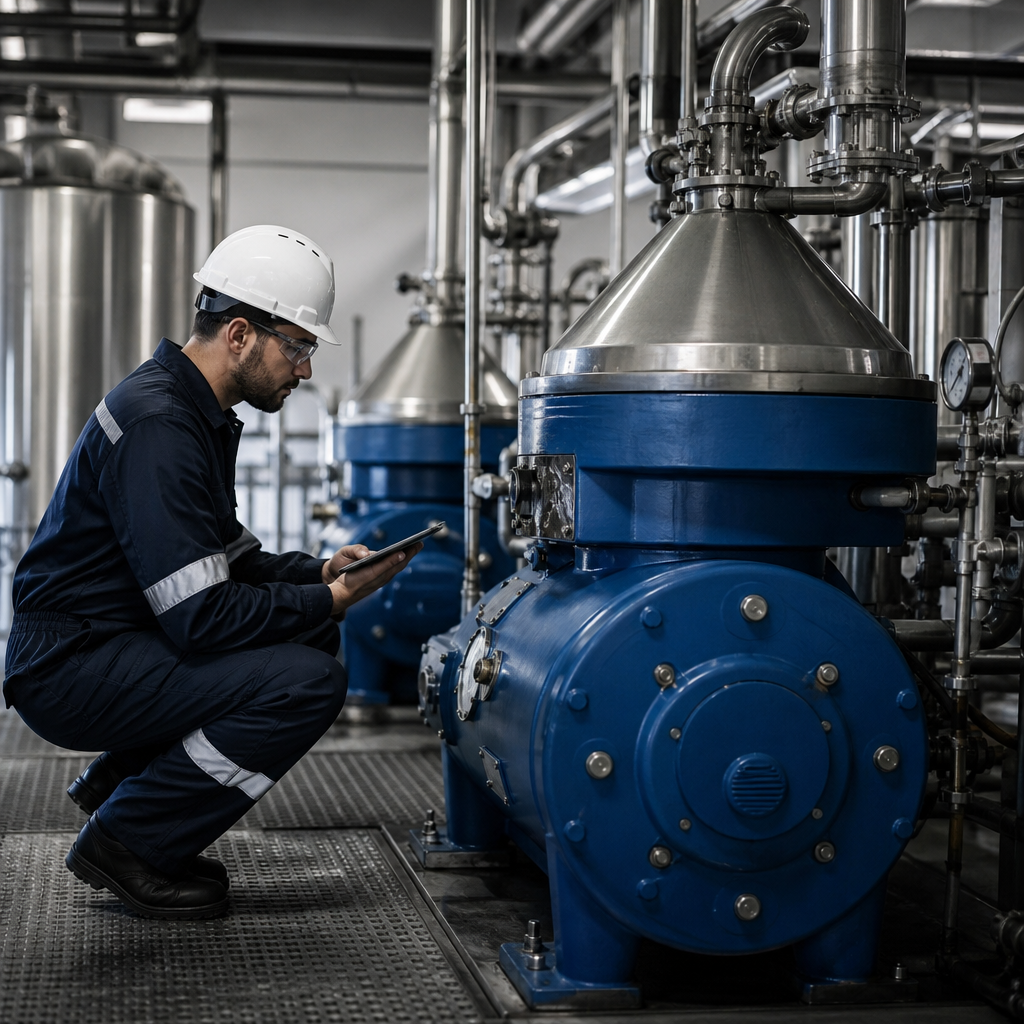
Industrial separation technology has evolved considerably over the past few decades, yet the fundamental need to efficiently separate liquids, solids, and emulsions remains constant across sectors ranging from food and beverage processing to pharmaceuticals and chemical manufacturing. Among the most reliable tools in this space, disc bowl centrifuges have earned a reputation for precision, throughput, and durability. As operational budgets tighten and sustainability goals push facilities toward smarter procurement, the demand for pre-owned separation equipment has grown substantially. Understanding how to evaluate, source, and integrate this equipment is now a core competency for plant managers and procurement specialists alike.
The Industrial Case for Disc Bowl Centrifuge Technology
Disc bowl centrifuges operate on a deceptively elegant principle: by spinning a liquid mixture at high rotational speeds within a stack of conical discs, they dramatically increase the effective settling area and accelerate the separation of phases by density. What might take hours in a gravity settling tank can be accomplished in seconds with a properly configured disc centrifuge. This makes them indispensable in applications such as clarifying edible oils, separating cream from milk, recovering yeast from fermentation broths, and purifying lubricating oils in marine and industrial engines.
The versatility of disc bowl centrifuges is one of their most compelling attributes. Depending on the configuration — whether hermetic, self-cleaning, or manual discharge — these machines can handle a wide range of feed compositions and viscosities. Their compact footprint relative to their throughput capacity also makes them attractive for facilities where floor space is at a premium, a consideration that becomes especially relevant when planning or expanding a processing line.
Why Separation Precision Matters Across Industries
In food and dairy processing, separation precision directly affects product quality, shelf life, and regulatory compliance. Even minor inefficiencies in fat or protein separation can translate into significant product losses or batch rejections. In the pharmaceutical sector, centrifugal separation must meet stringent purity standards, where even trace contamination can compromise an entire production run. The disc bowl centrifuge, with its ability to achieve tight separation tolerances, addresses these demands more effectively than many alternative technologies. This is why facilities across industries continue to invest in this equipment, even when acquiring it on the secondary market.
The Growing Market for Pre-Owned Process Equipment
Acquiring new industrial centrifuges represents a significant capital expenditure. Lead times from major manufacturers can stretch from several months to over a year, creating operational bottlenecks for facilities that need to scale quickly or replace failed equipment. This reality has fueled a robust secondary market for process equipment, where thoroughly inspected and refurbished machines offer a practical alternative. For many operations, sourcing pre-owned equipment is not a compromise — it is a strategically sound decision that accelerates deployment timelines and preserves capital for other operational priorities.
Facilities that source a used disc centrifuge from a reputable supplier gain access to equipment that has been proven in real-world industrial conditions. Unlike new machinery that may require extensive commissioning and calibration, a well-maintained pre-owned unit often arrives with a documented service history, known performance characteristics, and in many cases, available spare parts from the same generation of equipment. This operational continuity can be invaluable for maintenance teams already familiar with a particular manufacturer’s platform.
Key Considerations When Evaluating Pre-Owned Centrifuges
Not all pre-owned equipment is created equal, and due diligence is essential before committing to a purchase. Buyers should request full documentation of the machine’s operational history, including hours of use, maintenance records, and any modifications made during its service life. Physical inspection of the disc stack, bowl assembly, and sealing systems is critical, as wear in these components directly affects separation efficiency and can lead to costly downtime if not addressed prior to installation. Engaging a qualified process engineer to assess compatibility with the intended application is a worthwhile investment that can prevent expensive mismatches between equipment capability and process requirements.
Storage, Logistics, and the Infrastructure Behind Equipment Procurement
One often-overlooked aspect of acquiring industrial process equipment — whether new or pre-owned — is the logistical infrastructure required to store, transport, and stage it effectively. Large centrifuges and associated process components require secure, climate-appropriate storage environments, particularly when equipment is being held between decommissioning and reinstallation. For businesses operating in urban environments, finding adequate space can be a genuine challenge. Solutions like commercial storage in London have become increasingly relevant for equipment dealers, plant operators, and procurement teams managing complex asset transitions across multiple sites.
Proper storage is not merely a matter of convenience. Centrifuge components, particularly precision-machined bowls and disc stacks, must be protected from moisture, temperature extremes, and physical damage during any period of inactivity. Inadequate storage conditions can accelerate corrosion, degrade seals, and compromise the mechanical integrity of components that are otherwise in serviceable condition. Factoring storage costs and logistics into the total cost of equipment acquisition is therefore an important part of responsible procurement planning.
Complementary Equipment in Modern Processing Lines
Disc centrifuges rarely operate in isolation. They are typically integrated into broader processing lines that include pumps, heat exchangers, filtration systems, and control instrumentation. The performance of the centrifuge is directly influenced by the quality and consistency of the feed stream it receives, which is why upstream equipment selection is equally important. Positive displacement pumps, for example, are commonly used to deliver a controlled, pulsation-free feed to centrifuge inlets, protecting the separation process from flow irregularities that could reduce efficiency or damage internal components.
For facilities processing food, beverage, or dairy products, pump selection carries additional significance. Equipment must meet hygienic design standards while delivering reliable performance across varying viscosities and flow rates. Innovations in pump technology continue to expand what is possible in these demanding environments, as demonstrated by advances in twin-screw pump technology for food, beverage, and dairy processing, which offer gentle product handling alongside the flow consistency that centrifuge operations require.
International Process Plants: A Trusted Source for Separation Equipment
International Process Plants has established itself as a leading supplier of pre-owned industrial process equipment, with an extensive inventory that spans centrifuges, reactors, heat exchangers, and complete processing systems. Their disc bowl centrifuge offerings represent equipment sourced from decommissioned facilities worldwide, each unit evaluated for mechanical condition and suitability for redeployment. The company’s expertise in process equipment gives buyers confidence that the machines they acquire have been assessed by professionals who understand the technical demands of industrial separation applications. Their global reach and established supplier relationships make them a go-to resource for procurement teams working under tight timelines or budget constraints.
Conclusion: Smart Procurement Starts with the Right Equipment Partner
The decision to invest in disc bowl centrifuge technology — whether new or pre-owned — is ultimately a decision about operational capability and long-term process efficiency. As industries continue to face pressure to reduce costs without compromising output quality, the secondary equipment market offers a compelling pathway to achieving both objectives. Success in this space depends on working with knowledgeable suppliers, conducting thorough technical evaluations, and building the logistical infrastructure to support equipment transitions effectively. For facilities ready to enhance their separation capabilities, the pre-owned centrifuge market represents not a fallback option, but a genuinely strategic choice.
READ ALSO: Long term influencer partnerships vs one time collaborations