Two quotations for the same house, with the same headline capacity on the front page, can be thousands of pounds apart. Neither company is necessarily wrong. A printed quotation for a solar panel battery is a description of work as much as a price for hardware, and a household comparing a solar battery proposal is usually comparing two different jobs without knowing it.
Take the document apart and the gap stops being mysterious.
Most quotations contain the same five kinds of line, however they are laid out. The cells themselves. The inverter, which may be an addition or a replacement. The work of mounting and connecting everything. The electrical side, including the consumer unit, isolation, protection and the notification that follows. And access, which covers scaffolding, loft work and anything awkward about where the equipment has to live.
What the cost of solar battery storage is actually made of
The first line is where comparison quietly fails. Nominal and usable capacity are different figures, so two quotations showing the same headline kilowatt-hours can offer noticeably different amounts of energy in practice. Read the usable figure or ask for it, because that is the one the house will experience.
Chemistry sits underneath that. Cell chemistry differs between lithium iron phosphate and nickel manganese cobalt units, and the two behave differently in ways that matter over a decade of daily cycling rather than in the first month. Warranties tell you more than the specification sheet does, since they are usually written in cycles or in total energy throughput rather than in years alone. A warranty measured that way is a manufacturer stating how much work it expects the unit to do, which is a far more concrete promise than a period of time.
The cost of solar battery storage therefore splits into a part that is about energy and a part that is about the building.
- Cells and their management system, priced against usable capacity rather than the number on the box.
- Inverter provision, which is a small addition when an AC-coupled unit is added and a much larger one when a hybrid inverter replaces what is already there.
- Electrical work, covering isolation, protection, metering and the network notification that any installation of this kind requires.
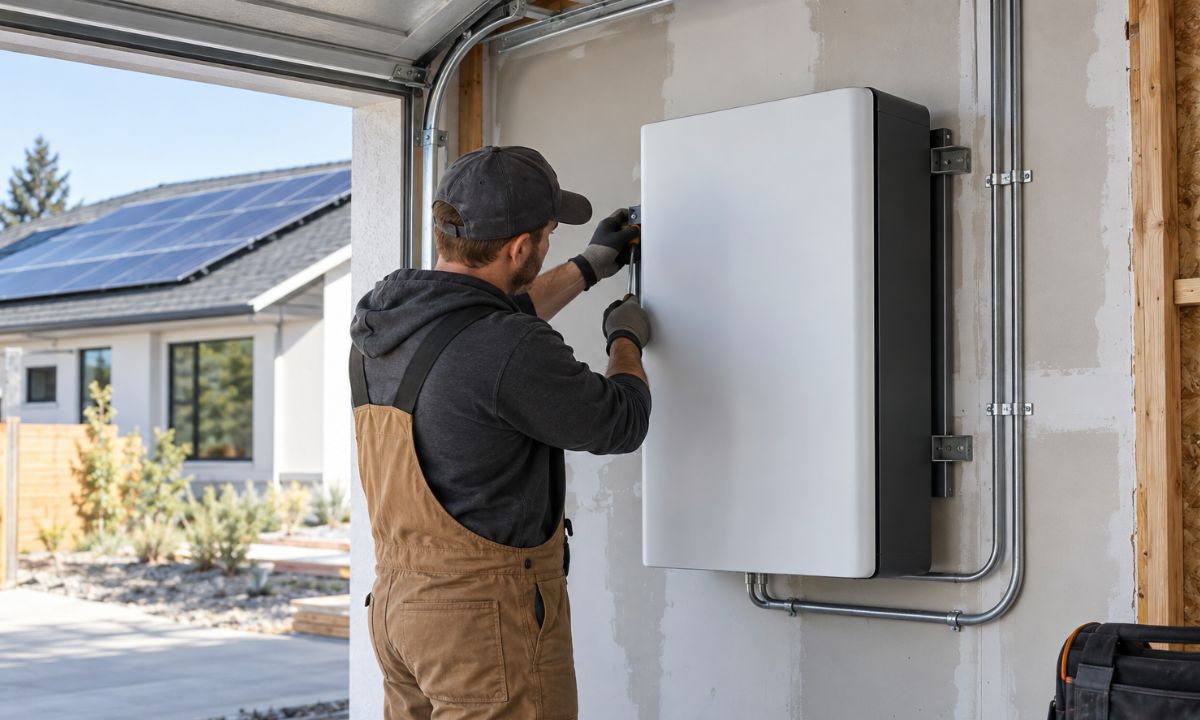
- Fitting and access, which is where a garage wall and a cramped loft separate from each other on price.
- Commissioning and handover, including the settings that decide how the system behaves on a tariff.
None of these lines is padding. They are the reason a quotation is longer than a product page, and a document that lists none of them has not been surveyed.
Why solar battery installation cost depends on when the work happens
The single largest explanation for a wide spread between quotations is timing rather than equipment. A hybrid inverter replacement and a retrofit AC-coupled unit are genuinely different jobs, which is why storage fitted alongside a new solar array costs less than the same storage added several years later. One visit covers the scaffolding, the electrical work and the commissioning once. The later job pays for all of it a second time, with an existing installation to work around.
That is the honest answer to why a solar battery installation cost quoted to somebody who went solar last year looks nothing like the one quoted to a household adding storage to a decade old array.
The retrofit premium is not a penalty invented by installers, and it is worth understanding before treating it as one. An existing array was designed around the equipment of its own moment, its inverter may be near the end of its working life, and its cabling was never routed with a battery in mind. Any of those can turn a straightforward addition into a partial rebuild, and a company that has spotted one of them will look expensive beside a company that has not looked.
Tax has moved as well, and it moved recently enough to distort comparisons. The zero rate of VAT on energy saving materials was extended to include standalone battery storage in 2024, so a quotation issued before that change and one issued after it are not directly comparable documents. An older figure passed on by a friend is not a benchmark.
Check the date on any figure you are using as a reference point.
Comparing solar battery storage uk quotes on a single measure
All of this reduces to one piece of arithmetic the household can do itself. Divide the total of each quotation by the usable capacity it offers, and compare the results. That figure, the cost per usable kilowatt-hour, is the only number that survives differences in chemistry, inverter arrangement and sales presentation.
It will not always reward the cheapest document. A higher total attached to genuinely greater usable capacity, or to electrical work the other company has quietly left out, can land lower on this measure than a headline bargain does. What the calculation removes is the ability of a quotation to look competitive by describing itself generously.
Run it across the solar battery storage uk market and a second pattern appears, which is that the spread narrows sharply once the comparison is put on this footing. Quotations that looked wildly different often sit close together, and the ones that remain far apart are usually far apart for a reason the paperwork will explain if you ask.
Then look at what the measure cannot see, because three things matter and none of them divide neatly.
- Warranty terms, read in cycles or throughput rather than years, since that is where a manufacturer states how much work the unit is expected to do.
- The installer’s own guarantee on the work, which is separate from the manufacturer’s cover on the hardware and is the one you will call first.
- Whether the proposal leaves room to add capacity later, or whether a second battery would mean starting the electrical work again.
Use the arithmetic to narrow the field to two, and use those three questions to choose between them. That order matters, since the calculation is quick and the questions are not.