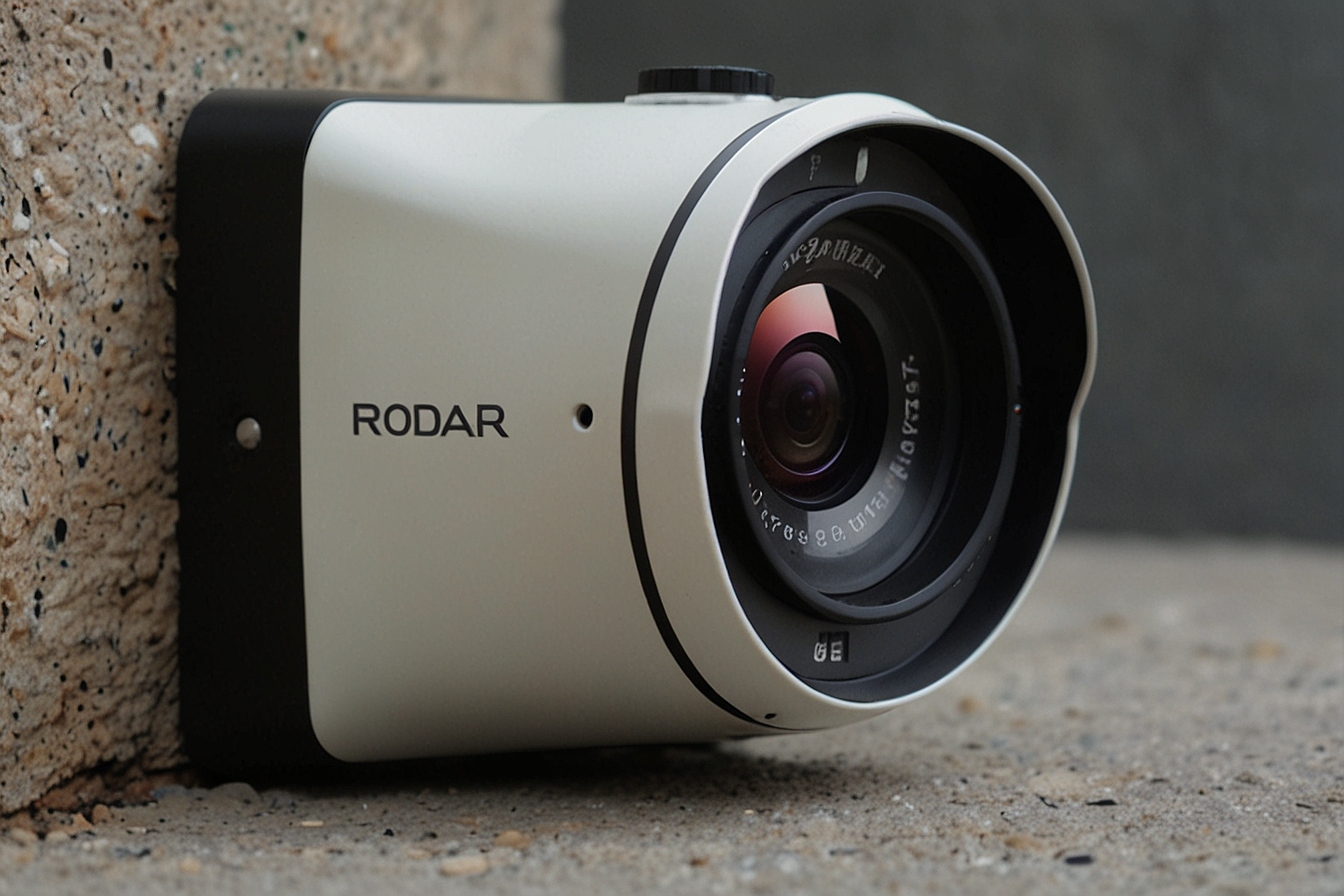
Let’s be honest. Opening a new camera box is equal parts thrill and sheer terror. All those buttons, dials, and menus promising professional results… if only you can crack the code. You’re not just buying a piece of tech; you’re buying potential. The potential to finally capture that stunning landscape, that perfect portrait, or that fast-moving action shot exactly as you see it.
That’s where a tool like the 1xRodar steps in. It sits in that sweet spot packed with enough advanced features to satisfy a seasoned pro, yet designed with an intuition that doesn’t leave the dedicated DIY enthusiast or aspiring creator feeling lost. But here’s the thing nobody tells you: a camera is only as good as your understanding of it. You can have the finest engine in the world, but if you don’t know how to shift gears, you’re not going anywhere special.
This guide isn’t just a rehash of the manual. Think of it as your seasoned friend, the one who’s been in the trenches with the 1xRodar, unpacking the real-world secrets to making this piece of kit sing. We’re going to move beyond the spec sheet and into the practical magic of settings, performance in tricky conditions, and those little user tips that you usually only learn after months of frustration.
First Impressions & Core Philosophy: What Makes a 1xRodar, Well, a 1xRodar?
Unboxing the 1xRodar, you immediately notice it feels substantial. Not heavy, but solid. It has a heft that whispers reliability, a grip that molds to your hand like it was meant to be there. This is by design. The folks behind 1xRodar tools seem to understand that professionals and serious hobbyists need a device that can handle being used, not just displayed.
The control layout is logical. Honestly, this isn’t talked about enough. Some manufacturers get cute, hiding essential functions in labyrinthine touchscreens. The 1xRodar, thankfully, provides dedicated dials for shutter speed and aperture in many of its models. That tactile feedback is everything when you’re trying to adjust on the fly. You develop a muscle memory, letting you keep your eye on the subject, not the menu.
Its core philosophy appears to be clarity under pressure. Whether that pressure is low light, fast motion, or just the client waiting for the shot, the 1xRodar is built to deliver consistency. It’s the workhorse you rely on when the margin for error is zero.
Decoding the Settings: A Practical Walkthrough
Alright, let’s roll up our sleeves and dive into the heart of the matter: the settings. This is where potential turns into pixels.
The Holy Trinity: Aperture, Shutter Speed, and ISO
Every photograph is a balancing act between these three. The 1xRodar gives you exquisite control over each.
- Aperture (The f/-stop): This controls your depth of field. Want that dreamy, blurred background (bokeh) in a portrait? Crank that aperture to a low f/-number like f/1.8 or f/2.8. Need everything from the foreground flower to the distant mountain in focus for a landscape? Dial it up to f/11 or f/16. The beauty of the 1xRodar lenses is their sharpness across a range of apertures, giving you creative freedom without sacrificing detail.
- Shutter Speed: This is all about freezing or showing motion. A fast shutter speed (like 1/1000s) will stop a bird in flight dead. A slow shutter speed (like 1/4s) will turn a waterfall into a silky smooth flow. The 1xRodar’s shutter mechanism is notably quiet and crisp, which is a godsend for event or wildlife photography where noise can be a distraction.
- ISO (Light Sensitivity): This is your digital brightener. In a dark room, you bump up the ISO. But there’s a trade-off: higher ISO can introduce grain or “noise.” Here’s where the 1xRodar’s sensor performance truly shines. You can comfortably push to higher ISO values than you might think before noise becomes problematic. In my experience, shots at ISO 3200 are often perfectly usable, which is a huge advantage for indoor or evening work without a flash.
Pro Tip: Don’t live in full Auto mode. Try Aperture Priority (A or Av) to control depth of field, or Shutter Priority (S or Tv) to control motion. Let the camera handle the rest. It’s the perfect training wheels toward full Manual mastery.
Autofocus Systems: Getting Pin-Sharp, Every Time
Modern autofocus can feel like black magic. The 1xRodar system, particularly in its later models, is impressively swift and accurate. You’ll find an array of focus area modes:
- Single-Point AF: You select one specific point. Precise, but you need to recompose.
- Zone AF: The camera uses a cluster of points. Great for unpredictable subjects.
- Wide/Tracking AF: The camera finds and follows the subject. Ideal for sports, kids, or pets.
My advice? For portraits, stick with Single-Point and place it right on the eye. For anything that moves, switch to Zone or Tracking. The custom function buttons can be set to toggle between these instantly—a setup I highly recommend.
The Color Profile: Making It Your Own
Out of the box, the 1xRodar tends to produce images with accurate, slightly conservative colors. They look great. But if you want a specific look, warmer portraits, punchier landscapes—that’s where Picture Profiles or Creative Styles come in.
Don’t be afraid to tweak these. Bump up the saturation and slight sharpness for vibrant travel photos. Dial in a cooler, flatter profile for architecture. You can even save custom presets. This is your visual signature; the camera is just the pen.
Real-World Performance: Where the Rubber Meets the Road
Specs are one thing. How does it handle the messy, imperfect real world? Let’s break that down.
Low-Light Prowess: This is a major strength. Thanks to that robust sensor and noise-handling algorithm, the 1xRodar is a reliable companion for dimly lit events, cityscapes at dusk, or indoor natural light photography. Pair it with a fast lens (like an f/1.4), and you can practically see in the dark.
Battery Life: The Unsung Hero: Some experts obsess over megapixels and forget about battery life. Big mistake. The 1xRodar’s battery performance is, in a word, stalwart. You can typically get a full day of moderate shooting on a single charge. For peace of mind on important shoots, a second battery is a cheap insurance policy, but it’s refreshing not to be constantly battery-anxious.
Build & Weather Sealing: Feeling a few drops of rain shouldn’t send you into a panic. Many 1xRodar bodies feature decent weather sealing. I’ve used mine in light drizzle and dusty conditions without a hiccup. It inspires confidence, which in turn lets you focus on the shot, not on coddling your gear.
1xRodar vs. The Competition: A Quick Reality Check
How does it stack up? Let’s look at a simplified comparison.
| Feature | 1xRodar (Pro Model) | Competitor A (Similar Price) | The Takeaway |
|---|---|---|---|
| Low-Light ISO Performance | Excellent (Clean images at high ISO) | Very Good | 1xRodar has a slight edge in challenging light. |
| Ergonomics & Controls | Traditional, tactile dials | Modern, touchscreen-heavy | Prefer physical dials? 1xRodar wins. Prefer a smartphone-like UI? Look elsewhere. |
| Lens Ecosystem | Strong selection of native & third-party lenses | Extensive native system | Both are great, but Competitor A’s range is older and wider. |
| Value Proposition | High performance per dollar | Strong brand premium | 1xRodar often gives you more core features for your money. |
The bottom line? The 1xRodar isn’t necessarily the absolute best at any one thing, but it provides a remarkably balanced, high-performance package. It’s the all-rounder that excels in enough areas to be a trustworthy primary camera.
User Tips & Tricks: From the Community
This is the gold, the stuff you learn after thousands of clicks.
- Back-Button Focus: Separate focusing from the shutter button. Assign focusing to a button on the back of the camera. This gives you permanent control over when to focus and when to fire, avoiding constant re-focusing between shots. It’s a game-changer.
- Customize Your “My Menu”: Buried that one setting you always need? Add it to the customizable “My Menu” tab. Suddenly, that crucial setting is two clicks away, not a two-minute dig.
- Expose for the Highlights: In high-contrast scenes, it’s better to slightly underexpose to protect highlight detail (like clouds in the sky). You can often recover shadow detail in editing, but blown-out highlights are gone forever. The 1xRodar’s histogram is your best friend here.
- Firmware Updates Are Your Friend: Seriously. Check the 1xrodar official website periodically. Firmware updates can quietly improve autofocus speed, fix bugs, and even add new features. It’s like a free camera upgrade.
Final Thoughts: More Than Just a Tool
The 1xRodar camera, at the end of the day, is an enabler. It’s a remarkably competent, dependable piece of engineering that removes excuses. It handles the technical heavy lifting so you can focus on the creative part: seeing the light, composing the frame, capturing the moment.
In a market full of flashy gimmicks and endless pixel-peeping debates, there’s something to be said for a tool that simply gets the job done, day in and day out, with quiet confidence. That’s the 1xRodar promise. It might not be the loudest name in the bag, but for the professionals and passionate enthusiasts who use it, it’s often the most trusted.
So, what will you create with yours? The settings are just the beginning. The real magic starts when you look through the viewfinder and decide what to do with all that potential.
Frequently Asked Questions
Q: Where can I buy a genuine 1xRodar camera and accessories?
A: Always purchase from authorized dealers or the official 1xrodar website. This guarantees a valid warranty, genuine batteries/accessories, and customer support. Be wary of deals that seem too good to be true from unofficial marketplaces.
Q: What’s the warranty period for 1xRodar tools?
A: Standard warranty periods typically range from 1 to 3 years, depending on the product and region. Always register your product on the official site and keep your receipt. Their warranty is known for being straightforward, without a lot of fine-print gotchas.
Q: Is the 1xRodar suitable for beginner photographers?
A: Absolutely. While it has professional depth, its guided modes and intuitive design make it approachable. Starting with a capable camera means you won’t outgrow it in a year.
Q: How does it perform for video work?
A: Very competently. Most models offer high-resolution video, reliable autofocus during recording, and clean output. It’s a solid hybrid choice for creators who need both stellar photos and very good video.
Q: Are third-party lenses compatible?
A: Yes, many third-party lens manufacturers produce excellent optics for the 1xRodar mount. This gives you incredible flexibility and often, more affordable options to expand your kit.
Q: What’s the best way to clean the camera sensor?
A: For dust spots, use a rocket blower first. For stubborn spots, sensor swabs and cleaning fluid designed for cameras are safe if you follow instructions carefully. If you’re nervous, professional cleaning is a cheap and wise option.
Q: Why do my images sometimes look soft on the computer?
A: This is common! First, check that your shutter speed wasn’t too slow, causing motion blur. Second, every lens has a “sweet spot” aperture (often f/5.6 to f/8) where it’s sharpest. Shoot at that. Finally, a little bit of sharpening in post-processing is normal.
